When Is the Best Time to Trim Trees in Texas?
The answer to what time of year should you trim trees in Texas is usually the dormant season, before the next major growth flush. Cooler weather can make shade-tree structure easier to inspect before vigorous spring growth. However, species, health, pruning purpose, storm damage, and disease risk can change the recommendation. Oaks require special timing because fresh wounds can create opportunities for oak wilt infection.
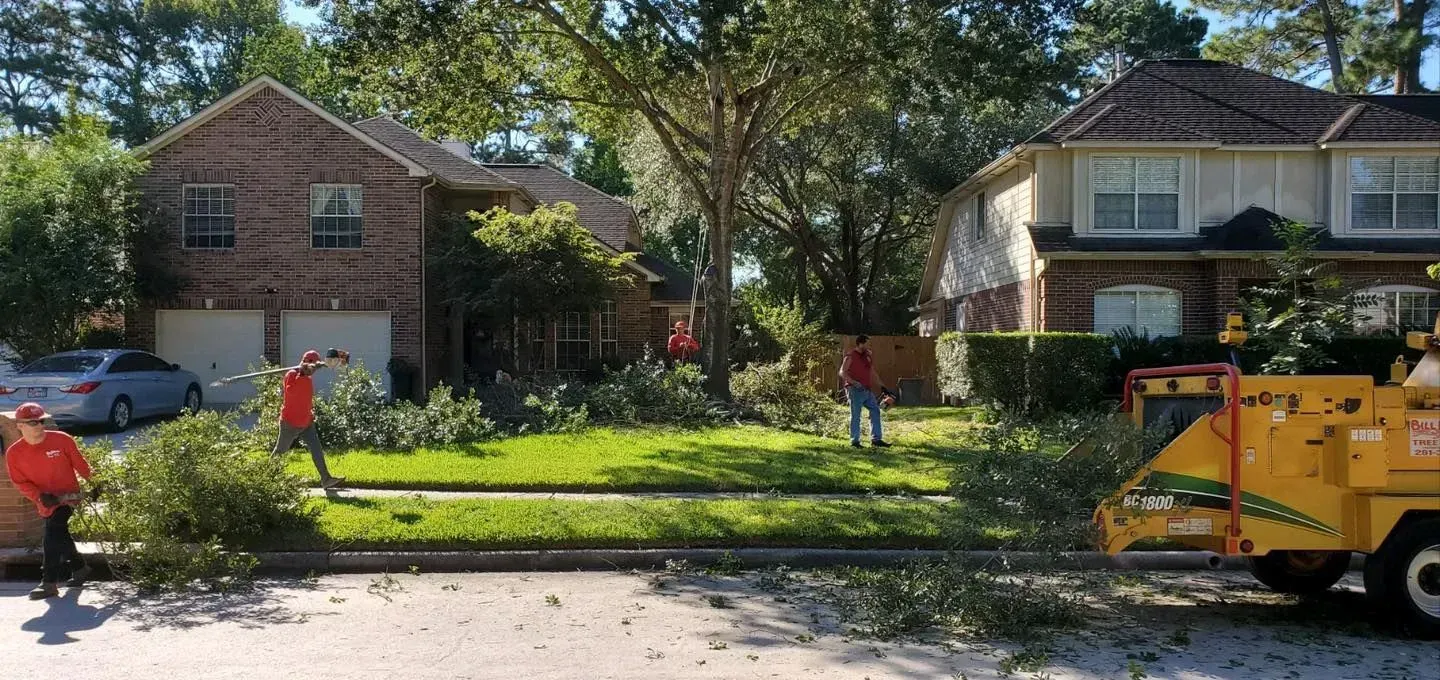
Homeowners in Spring, The Woodlands, Tomball, and Cypress should treat timing as part of the tree-care decision, not a calendar date. Routine crown cleaning can often wait, while a broken limb over a driveway may require immediate action. Bill Beal’s Bonded Tree Service provides residential and commercial
tree trimming in Spring, TX for health, structure, clearance, and safety. This guide explains when to schedule work, when not to wait, and what oak owners should know.

The Best General Window Is the Dormant Season
For many Texas landscape trees, late fall through winter is practical for planned pruning. Reduced foliage reveals crossing branches, deadwood, weak attachments, and canopy balance. The tree is not investing as much energy in a new leaf flush, and work can finish before the next growing period. Dormant access may also reduce disturbance to surrounding landscaping.
Texas A&M AgriLife’s
proper pruning guidance says trees are generally best pruned during dormancy, often before growth begins. That is a starting point, not permission to treat every species alike. Flowering trees, palms, stressed trees, and oaks may need another schedule or a limited scope. Identify the species and objective before substantial cuts.
| Timing window | Common use | Important caution |
|---|---|---|
| Late fall to winter | Routine structural pruning and crown cleaning | Confirm species needs and oak wilt precautions |
| Before spring growth | Corrective work before the growth flush | Avoid removing excessive live canopy |
| Immediately after a storm | Broken, hanging, or hazardous limb response | Address safety first and assess the whole tree |
| Active growing season | Limited clearance or small corrective cuts | Heavy pruning may add stress after leaf expansion |
| Late summer | Only necessary or species-appropriate work | New growth may not harden before cold weather |
| Any season | Deadwood or immediate hazards when conditions allow | Safety and disease protocols still apply |
Why Dormant-Season Pruning Often Works Better
The right timing supports a defined objective instead of indiscriminate foliage removal. A less-dense canopy reveals major attachments, rubbing branches, competing leaders, and old storm damage. This helps separate useful correction from unnecessary thinning.
Dormant-season benefits can include:
- Clearer visibility: Structural defects and dead branches are easier to trace.
- Less interference with active growth: The tree is not in the middle of producing a large new leaf flush.
- Better planning: Cuts can focus on safety, health, clearance, and natural form.
- Simpler property protection: Dormant beds and reduced landscape activity may improve access around some trees.
- Potential scheduling value: Planned maintenance can avoid the urgency and demand that follow major storms.
- Weather preparation: Removing confirmed weak branches can reduce avoidable hazards.
The
International Society of Arboriculture says routine weak, dead, or diseased limb removal may be possible year-round, while wound closure is generally strongest before the spring growth flush. Every cut can change future growth.
Good pruning serves a defined purpose and preserves enough live crown for recovery.
Oak Tree Trimming Requires Special Texas Timing
Oak wilt changes the calendar for oak tree trimming in Texas. Texas A&M Forest Service advises avoiding pruning or wounding oaks from February through June, when sap-feeding beetles and fungal activity can increase the chance of aboveground disease transmission. All oak species are susceptible, although red oaks and live oaks play different roles in how the disease establishes and spreads. The agency also recommends immediately painting every fresh oak wound, regardless of season.
This rule matters even when a cut seems small because lawn equipment, construction, storm breakage, and pruning can all create entry points. Routine oak pruning is better planned outside the higher-risk window, while immediate safety hazards still require professional judgment and correct wound protection. If an oak shows unusual browning, veinal discoloration, rapid decline, or nearby oak losses, diagnosis should come before routine trimming. Review the current Texas A&M oak wilt prevention guidance rather than relying on a generic national pruning calendar.
Some Branch Problems Should Not Wait for Winter
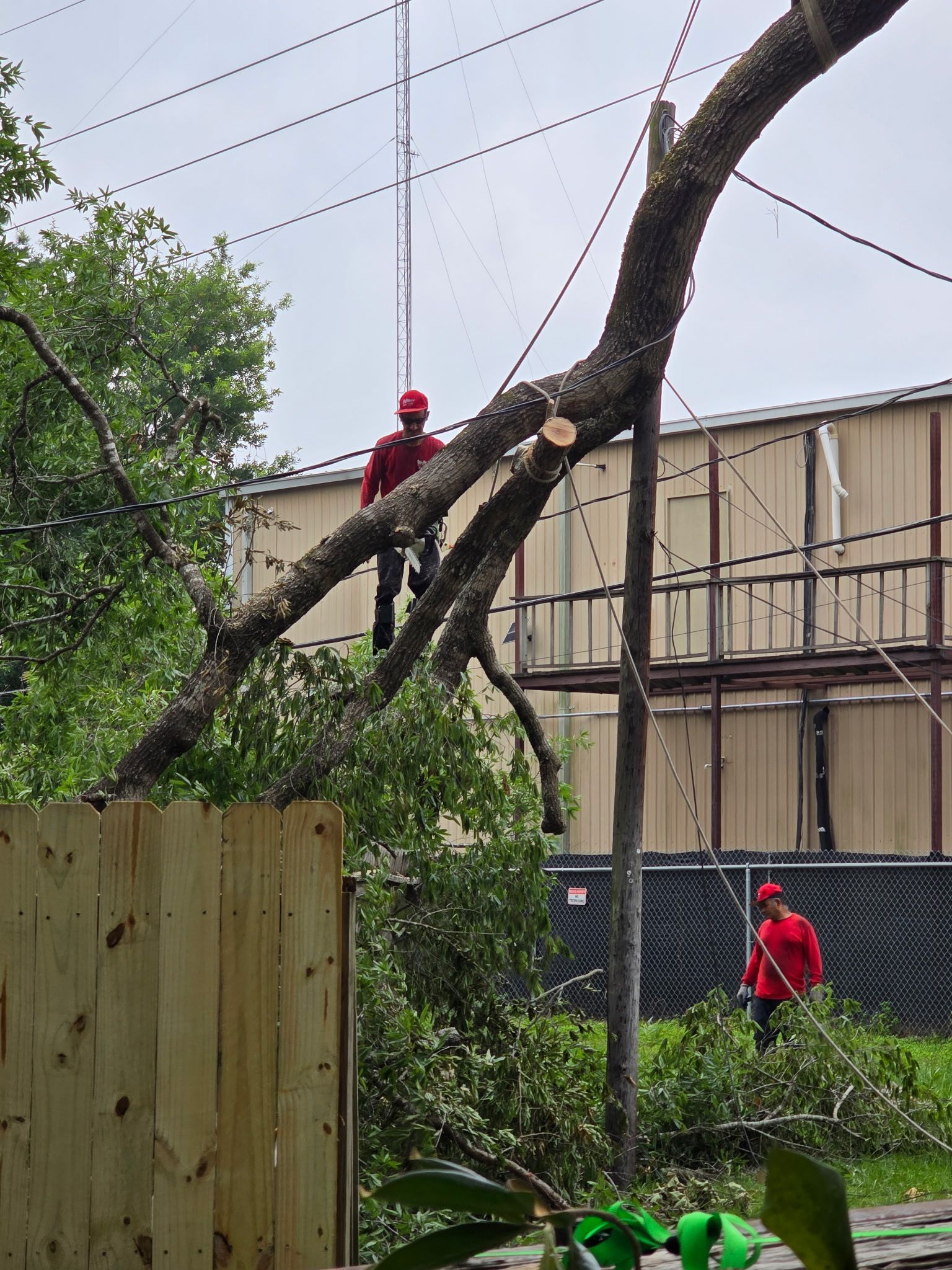
The preferred season does not override an immediate hazard. A split or hanging limb can fail before the ideal window arrives. Storm damage may also reveal a weak union, cracked trunk, or decay that changes maintenance into risk management.
Request prompt evaluation when you notice:
- A branch hanging over a roof, driveway, sidewalk, play area, or frequently occupied space.
- Fresh cracks where a large limb joins the trunk or another major branch.
- A broken top, suspended limb, or branch caught in the canopy.
- Deadwood large enough to damage people, vehicles, fences, or structures.
- New leaning, soil lifting, root damage, or movement after wind and saturated ground.
- A limb contacting a roof or obstructing necessary access, sightlines, or safe clearance.
- Damage near electrical conductors or utility equipment.
- Rapid canopy decline, fungal growth, or cavities that pruning alone may not solve.
Do not stand below damaged canopies or use a chainsaw from a ladder. Contact the utility when branches are near energized lines. Bill Beal’s offers
24/7 emergency tree services for urgent problems around Spring. First control risk, then preserve as much sound structure as conditions allow.
Tree Species and Pruning Goals Change the Schedule
The phrase best time to trim trees in Texas describes a general window, but the plan depends on the tree and purpose. A young shade tree needs a different approach from a mature oak, flowering ornamental, or palm. Safety, clearance, storm recovery, and canopy development also require different cuts. Use this table for planning, not as a substitute for inspection.
| Tree or objective | Typical timing approach | What the assessment should confirm |
|---|---|---|
| Mature shade tree | Dormant season for planned structural work | Deadwood, weak attachments, clearance, and canopy balance |
| Oak tree | Outside February through June when possible | Oak wilt risk and immediate wound-painting protocol |
| Storm-damaged tree | As soon as safety permits | Broken limbs, trunk cracks, root movement, and recoverability |
| Flowering tree | Based on flowering habit and species | Whether pruning would remove developing flower buds |
| Young tree | Periodic structural training while cuts are small | Leader selection, spacing, and future clearance |
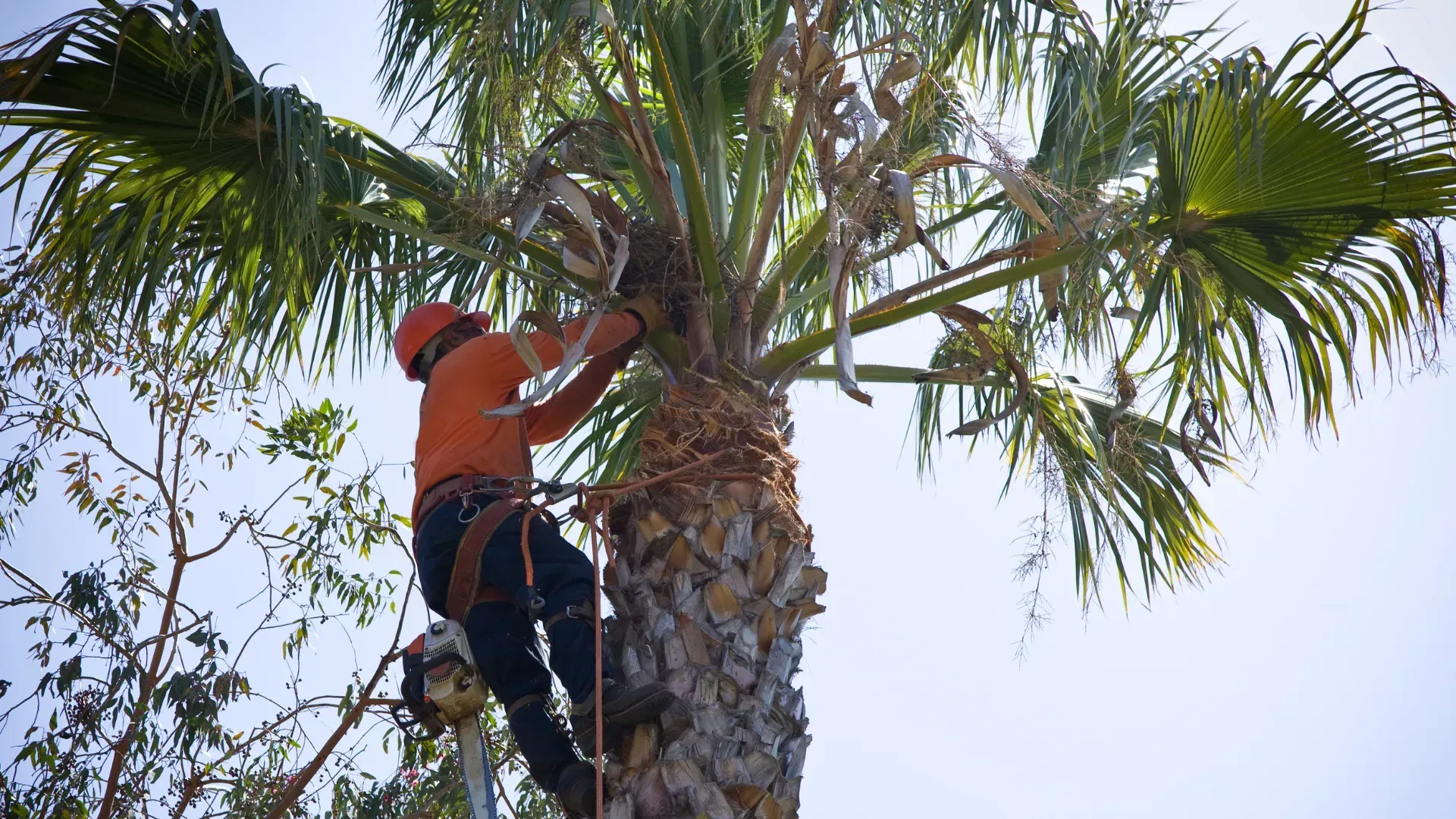
| Palm | Remove dead or hazardous fronds as needed | Live frond retention and protection of the growing point |
| Clearance pruning | Before branches contact structures or block access | Target clearance without topping or over-pruning |
Spring-flowering ornamentals may lose blooms if pruned too early, while fruit trees can have production-specific needs. Palms should not be stripped of healthy green fronds for an artificial shape. Stressed trees may need lighter or delayed work because foliage supports recovery. Identify an uncertain species before scheduling.

Good Tree Trimming Is About the Right Cuts
Timing cannot rescue poor technique. Improper cuts can damage collars, tear bark, leave stubs, trigger weak sprouts, or remove too much foliage. Texas A&M Forest Service says not to remove more than 25 percent of the crown at one time, and mature or stressed trees may need less.
A responsible trimming plan should:
- Define the objective first, such as removing deadwood, improving structure, creating clearance, or reducing a specific risk.
- Remove defective branches first before considering cosmetic thinning.
- Cut just outside the branch collar instead of making a flush cut against the trunk.
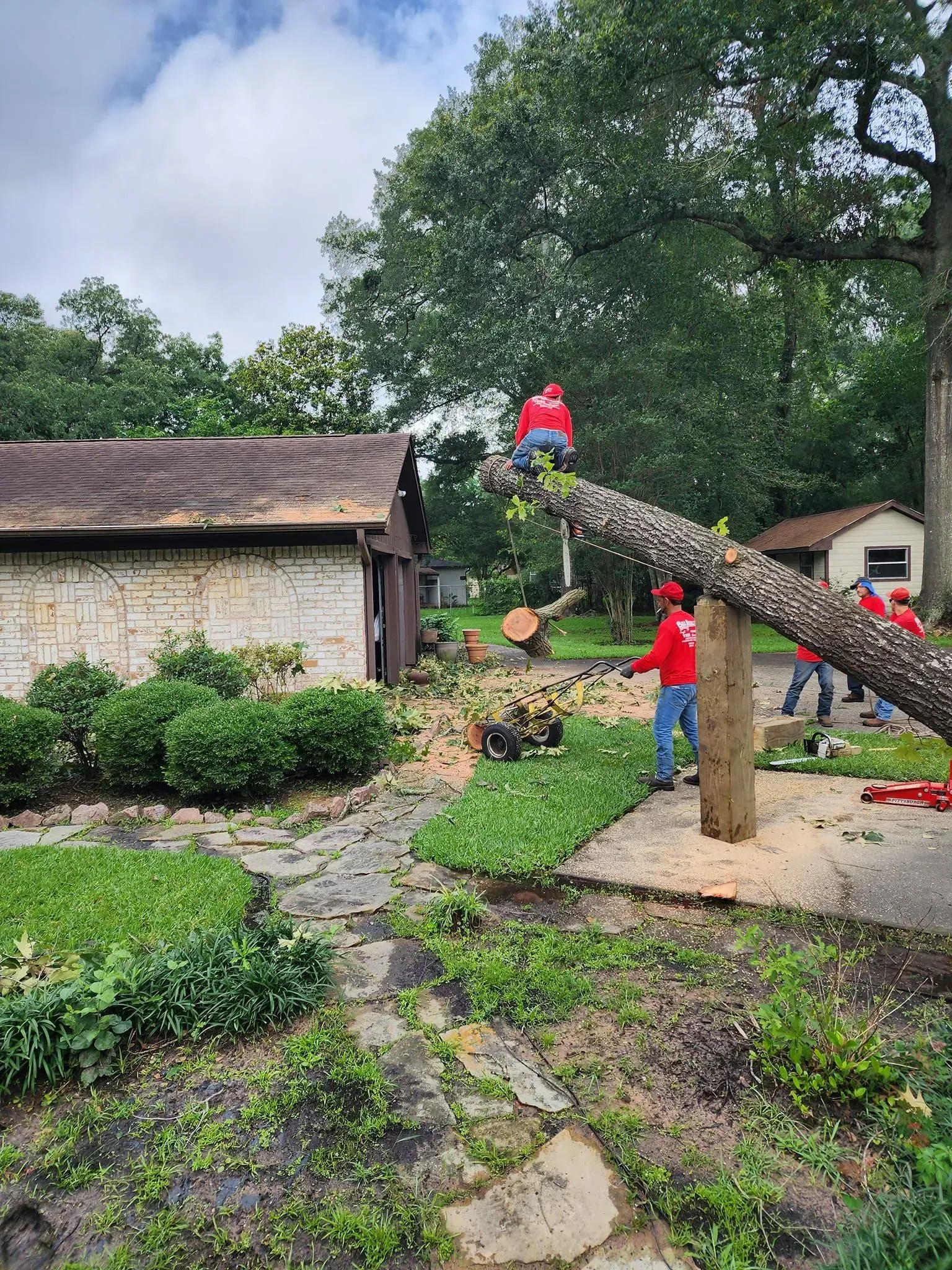
- Use a staged cut on large limbs to prevent the branch from tearing bark as it falls.
- Preserve the natural form rather than shearing or stripping the interior canopy.
- Avoid topping, which leaves large wounds and encourages weakly attached regrowth.
- Retain sufficient live crown so the tree can photosynthesize and respond to pruning.
- Protect oak wounds immediately using current Texas oak wilt recommendations.
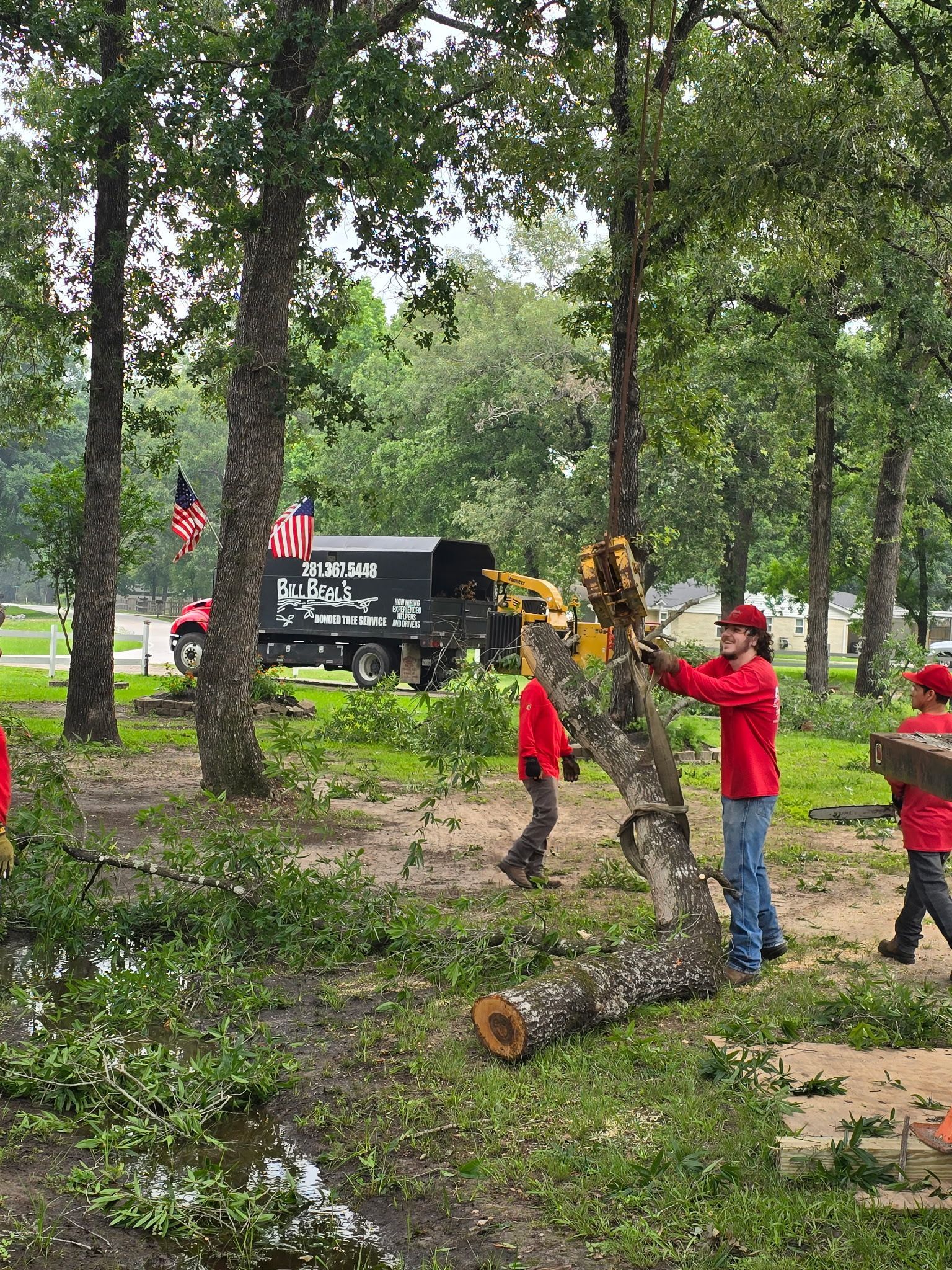
- Plan controlled lowering above roofs, fences, pools, or landscaping.
Bill Beal’s
tree trimming service addresses overgrown and unnecessary branches while improving shape, light, and safety. Our team evaluates the tree before deciding how much to remove. A mature tree should not be thinned merely because equipment is onsite. Every cut should support the goal.
Signs It Is Time to Schedule a Professional Assessment
A calendar reminder is useful, but the tree’s condition should determine whether work is actually needed. Bill Beal’s suggests considering a recurring trimming schedule about every four years, although species, age, site, growth rate, and storm exposure can shorten or extend that interval. Branches rubbing together, dense competing growth, old breakage, building contact, and large dead limbs are stronger reasons to schedule an assessment than the passage of time alone. A professional can also determine whether the concern requires trimming, monitoring, treatment, cabling, or removal.
Walk around the tree from a safe distance and compare the canopy from several angles. Look for hanging limbs, cracked unions, branches over occupied areas, canopy dieback, trunk cavities, roof contact, and changes after recent weather. Do not climb the tree, pull on suspended branches, or use a pole saw near utilities. Photographs from the ground can help document changes and explain the concern when requesting an estimate.
Use a Decision Framework Before Scheduling Tree Trimming
Start with the pruning reason, species, urgency, and preferred window. Routine structure work can usually wait for dormancy, while hazards need prompt assessment. Oaks require added disease prevention, and severe damage may need more than trimming.
Use this framework:
- Schedule dormant pruning when a stable tree needs structure, health, or clearance work.
- Plan oak trimming outside February through June when possible and paint fresh wounds immediately year-round.
- Request prompt hazard assessment for broken, hanging, cracked, or storm-damaged branches.
- Delay heavy pruning when the tree is stressed or has just produced spring growth.
- Match timing to flowering or fruiting when the tree’s seasonal display or production matters.
- Choose limited corrective pruning when a small number of cuts can achieve the goal without unnecessary canopy loss.
- Compare trimming with removal when the trunk, roots, or main structure cannot safely support the remaining crown.
- Contact the utility rather than attempting work near energized lines.
This framework applies across Spring, The Woodlands, Tomball, and Cypress, but species, access, targets, soil, and storm exposure differ. A large oak above a home requires different rigging and precautions than a young ornamental in an open lawn. Dense lots may require controlled lowering around roofs, fences, vehicles, and landscaping. An onsite evaluation turns a seasonal rule into a tree-specific scope.
Estimated 2026 Cost and Estimate Context
Every tree trimming project is different, so we begin with a
free onsite estimate based on the tree’s height, condition, accessibility, surrounding structures, equipment needs, and debris volume. This allows us to recommend the right scope and provide pricing for the actual property rather than relying on a generic estimate. For general budgeting, HomeGuide’s 2026 tree trimming cost guide lists a national average of
$400 to $900 per tree, with costs ranging from about
$80 for a small tree to $2,500 or more for an exceptionally large or neglected tree. These national figures are helpful for initial planning, but the free onsite estimate will provide the most accurate price for your specific trees.
| Pricing or scope item | Published or planning context | What changes the final amount |
|---|---|---|
| Bill Beal’s onsite estimate | Free | Tree condition, goals, access, and full work scope |
| National average trimming range | $400 to $900 per tree | Height, species, canopy density, and location |
| Small-tree national starting point | About $80 | Simple scope, open access, and limited debris |
| Large or neglected tree context | $2,500 or more | Height, hazards, rigging, equipment, and crew size |
| Emergency storm work | Scope dependent | Instability, timing, access, utilities, and targets |
| Debris handling | Scope dependent | Limb volume, hauling, chipping, and site access |
Frequently Asked Questions
What month is best for trimming trees in Texas?
There is no single month for every Texas tree. Late fall through winter is often a useful window for routine shade-tree pruning because many trees are dormant and structure is easier to see. Confirm the species, objective, and current condition before scheduling substantial work.
Can trees be trimmed during summer in Texas?
Limited pruning may be appropriate when a tree needs clearance, deadwood removal, or hazard correction. Heavy live-canopy removal during heat or drought can add stress, especially to a weakened tree. A professional should determine whether the work can wait or should be reduced to the necessary cuts.
When should oak trees be trimmed in Texas?
Plan routine oak pruning outside February through June when possible. Texas A&M Forest Service recommends avoiding fresh wounds during that higher-risk period and immediately painting all oak wounds at any time of year. Hazardous branches may still require prompt professional action.
Can dead branches be removed at any time?
Dead, weak, or hazardous branches can often be removed when necessary, provided site conditions allow safe work. The crew should still confirm the branch is dead, check surrounding structure, and follow species-specific disease protocols. Oak wounds require immediate paint even outside the higher-risk season.
How often should mature trees be trimmed?
The interval depends on species, age, structure, site, and past work. Bill Beal’s suggests considering tree trimming about every four years, but some trees need earlier hazard or clearance work while others need only monitoring. Annual assessment does not mean annual cutting.
Is tree topping a faster alternative to pruning?
No. Topping removes branches without preserving appropriate laterals, creates large wounds, and often triggers weak regrowth. The ISA describes topping as a harmful practice that can increase stress, decay, and future risk. Proper reduction or selective pruning is safer for trees that can reasonably be retained.
Plan Tree Trimming Around the Tree, Not Just the Calendar
The best time to trim trees in Texas is usually during dormancy, but species and purpose determine the final schedule. Oaks require special protection from February through June, while broken or hazardous branches should not be ignored until winter. Bill Beal’s Bonded Tree Service evaluates structure, health, clearance, access, and surrounding targets before recommending a scope. We serve residential and commercial properties in Spring, The Woodlands, Tomball, Cypress, and communities within our surrounding service area.
If your trees have deadwood, crowded growth, old storm damage, or branches over valuable property, schedule an assessment before the next severe-weather event. Contact Bill Beal’s Bonded Tree Service to request a free onsite estimate and discuss the right season for the work. We will explain which cuts are necessary, which can wait, and whether trimming is the right solution. A well-timed, carefully limited plan protects the tree while improving safety and long-term structure.
Recent Posts