Why Mushrooms at the Base of a Tree Can Be a Warning Sign After Fall Rain
Why Mushrooms Often Appear After Fall Rain
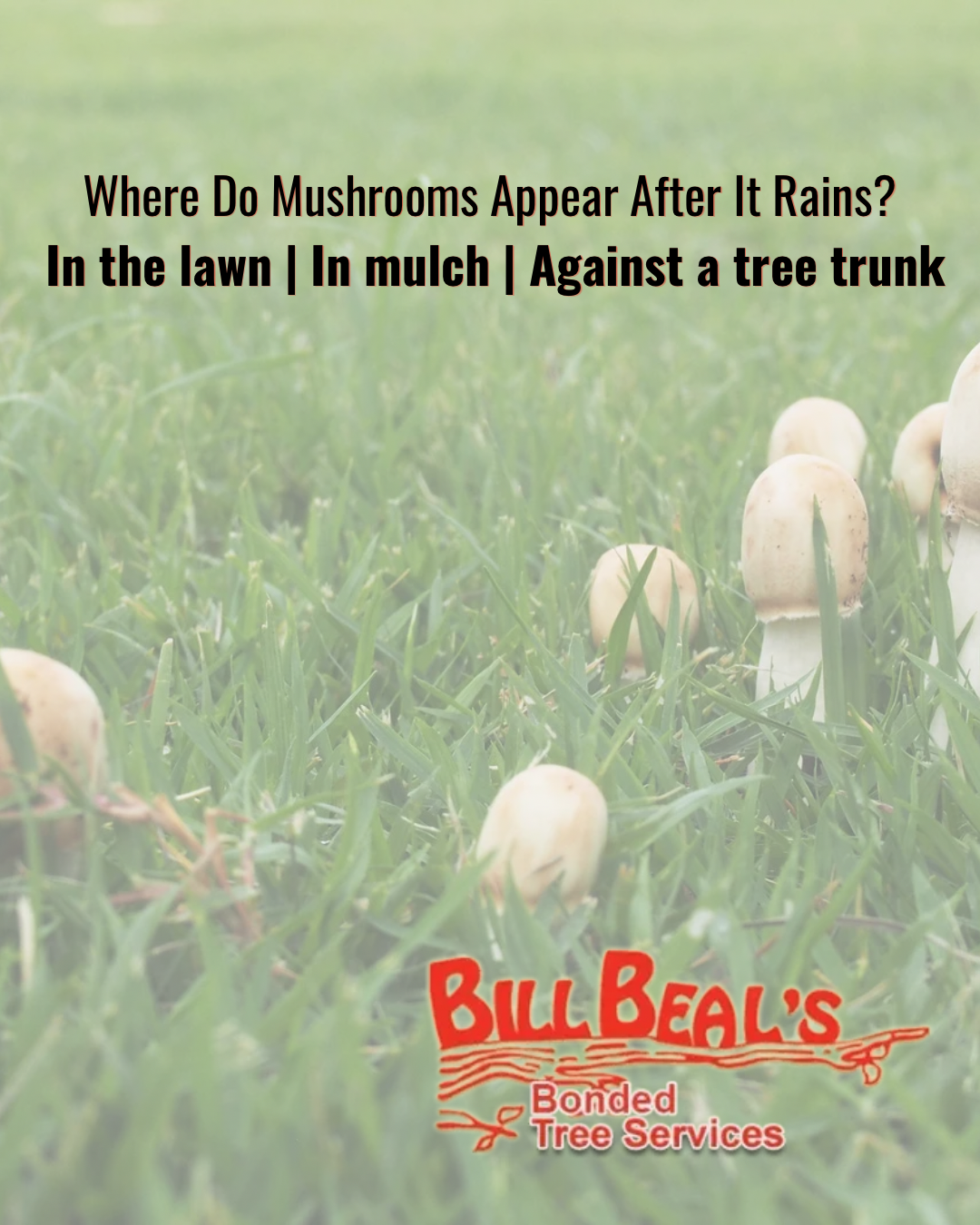
Mushrooms can appear overnight after rain because moisture encourages fungi to produce visible fruiting bodies. The mushroom is only the reproductive part, while most of the fungus remains hidden in soil or wood. Warm soil and repeated rainfall around Spring create favorable conditions as fall temperatures ease. Seeing mushrooms at the base of a tree confirms fungal activity, but not its exact cause.
Some fungi simply decompose buried roots, mulch, or organic material near a healthy tree. Others grow from decaying roots and may indicate
tree root rot, butt rot, or internal decay. The
University of Minnesota Extension explains that mushrooms can emerge after heavy rain as soil fungi break down organic material. The key questions are what the mushrooms attach to and whether the tree has other defects.
When Tree-Base Mushrooms Are More Concerning
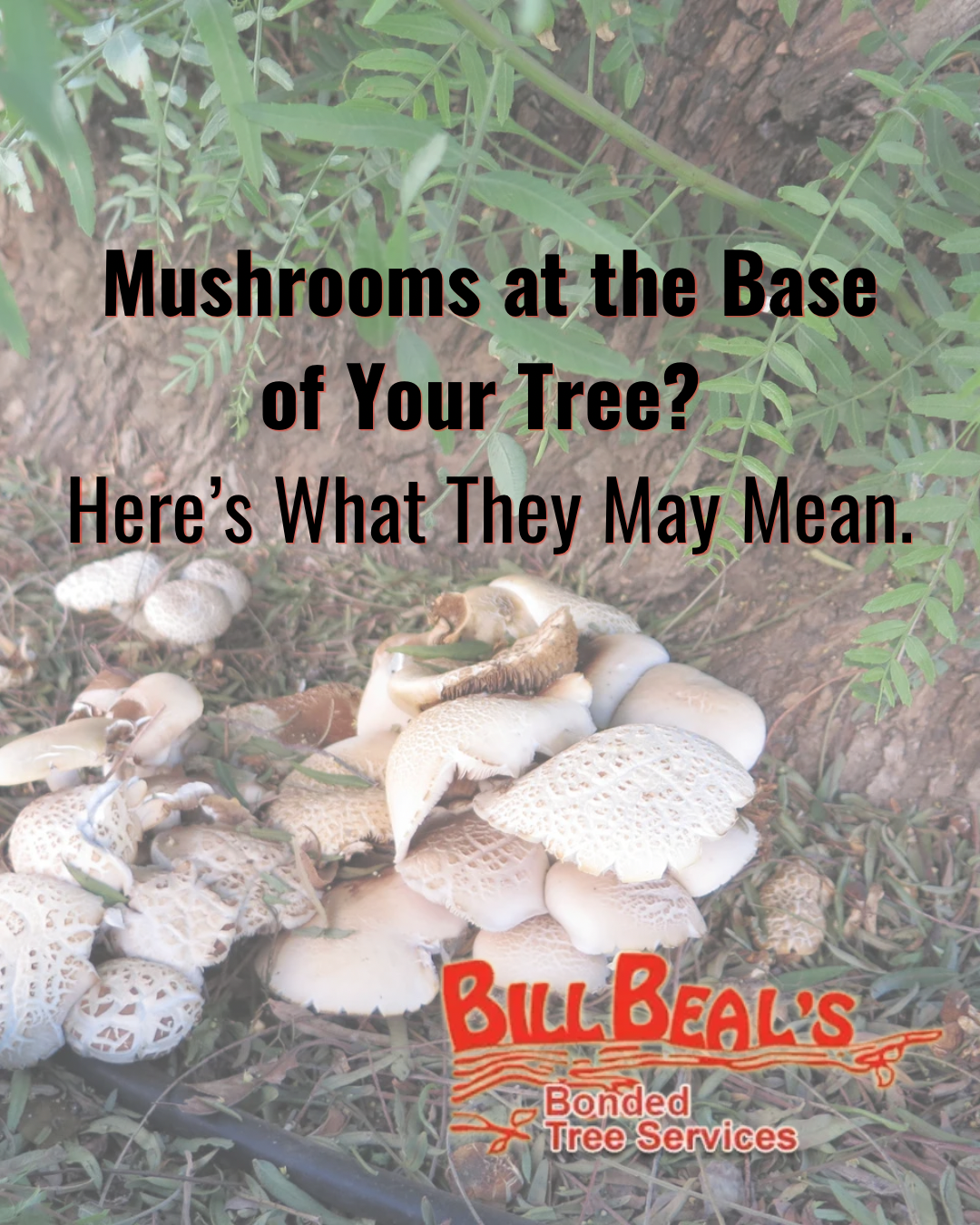
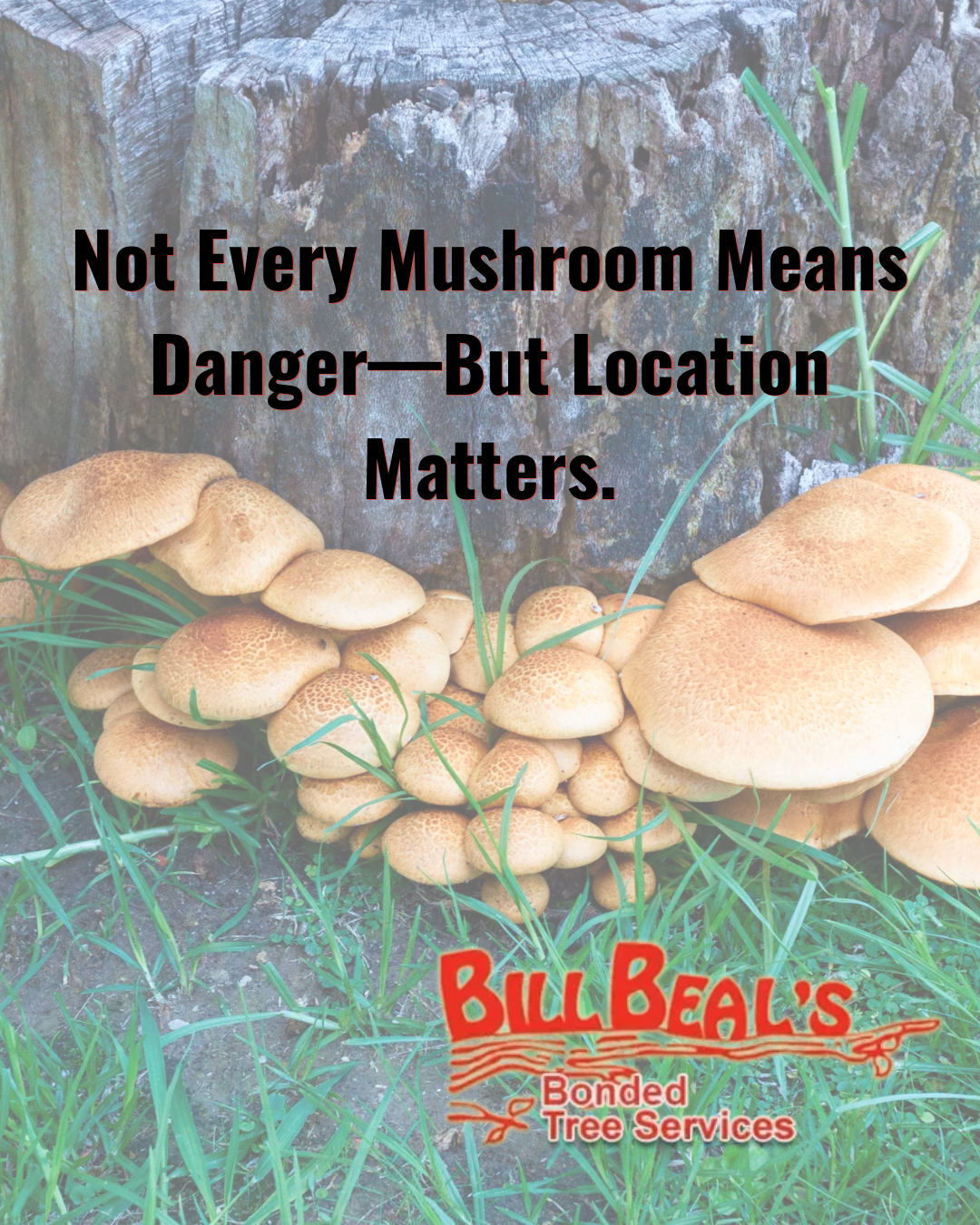
Location changes the meaning of fungal growth. Lawn mushrooms may feed on buried wood, although tree roots can extend beyond the canopy. Growth emerging from the root flare, trunk, exposed roots, a cavity, or a wound is more concerning because it may connect to structural wood. Shelf-like conks on the lower trunk deserve prompt evaluation, even when the canopy looks green.
The growth pattern matters as well. Honey-colored clusters can be associated with Armillaria, while firm conks may come from fungi that decay roots, the trunk base, or heartwood. Do not diagnose a species from color alone because many fungi look similar and change with age. Use the observations below to judge assessment urgency, not to make a final diagnosis.
| What You See | What It May Suggest | Sensible Next Step |
|---|---|---|
| Small mushrooms scattered through mulch or lawn | Decomposition of mulch, buried roots, or organic matter | Photograph the area and monitor the tree |
| Mushrooms touching the trunk or root flare | Possible decay in roots or the lower trunk | Arrange a professional tree assessment promptly |
| Hard shelf-like conks on the trunk base | A wood-decay fungus may be fruiting from structural tissue | Keep people away from the fall zone and seek expert evaluation |
| Repeated clusters in the same location | A fungal source may remain underground or inside wood | Document recurrence and inspect the roots and trunk base |
| Mushrooms plus canopy decline or dead limbs | Root function or structural strength may be compromised | Treat the situation as a potential tree hazard |
| Mushrooms beside a stump with no symptoms in nearby trees | Fungi may be decomposing the old stump and roots | Monitor nearby trees and consider stump grinding if appropriate |
How Root and Butt Rot Can Weaken a Tree
Roots do more than absorb water and nutrients. They anchor the tree against wind, while the root flare and lower trunk transfer enormous loads between the canopy and the soil. Wood-decay fungi break down components that give this tissue strength, sometimes without causing immediate leaf discoloration. A tree can therefore look reasonably full while losing important support below ground or inside the trunk base.
Decay does not spread identically through every species or tree. The
Penn State Extension guide to decay
explains that trees compartmentalize damage rather than healing wood, and mushrooms or conks can indicate expanding decay. Rain may trigger fruiting without creating the underlying problem during one storm. By the time a fruiting body appears, the fungus may have affected wood for years.
Other Signs That Increase the Level of Concern
Mushrooms become more meaningful alongside structural or health changes. Look for a new lean, lifted soil, cracked ground, cavities, loose bark, trunk cracks, and soft or discolored roots. Canopy clues include smaller leaves, thinning foliage, early color change, and multiple dead branches. One symptom does not require removal, but several related symptoms make a prompt tree risk assessment more important.
Pay attention to what the tree could strike if it failed. A tree beside a house, driveway, play area, sidewalk, or pool creates greater consequences than one in open space. The International Society of Arboriculture's risk guidance notes that inspection may be visual or use instruments to investigate decay. Risk combines condition, failure likelihood, the part likely to fail, and targets within reach.
- New or increasing lean, especially with raised soil or exposed roots
- Soft, crumbling, stringy, or hollow-sounding wood near the base
- Cracks where major stems join or where the trunk meets the roots
- Fresh dead branches, a thinning canopy, or unusually small leaves
- Cavities, missing bark, or old wounds near visible fungal growth
- Recent construction, trenching, compaction, or grade changes over roots
What to Do When You Find Mushrooms Around a Tree
Keep people and pets away because identification and toxicity are uncertain. Photograph the mushrooms, attachment points, trunk base, canopy, and full tree before the fruiting bodies deteriorate. Note their timing, recent rainfall, irrigation, wind exposure, and any previous recurrence. Do not climb, strike cavities, excavate major roots, or stand beneath suspicious limbs for a closer view.
Reduce exposure while arranging an assessment. Move vehicles and furniture from the potential fall zone, and limit nearby play or seating when significant defects exist. If the tree leans toward a structure, drops limbs, cracks, or shifts at the roots, contact a qualified professional promptly. Bill Beal's Bonded Tree Service offers hazardous tree removal assessments in Spring, including a free on-site estimate that considers fences, pools, buildings, and power lines.
A Useful Photo and Observation Checklist
- Take one photo showing the entire tree and its surroundings.
- Photograph each mushroom cluster without removing it first.
- Capture the root flare, exposed roots, cavities, wounds, and trunk cracks.
- Record changes in lean, soil level, drainage, or recent construction.
- Note dead branches, thinning foliage, and unusual leaf color or size.
What Not to Do With Suspected Root Decay
Removing visible mushrooms does not remove fungus inside wood or soil. Applying household chemicals around roots can injure the tree, damage nearby plants, and obscure evidence. Adding soil or piling mulch over the base can trap moisture against bark and hide the root flare. Correct diagnosis should come before treatment, pruning, excavation, or removal.
Avoid assuming that more water will restore a declining tree after dry weather. Saturated soil can reduce oxygen around roots, and a sprinkler repeatedly wetting the trunk base may sustain conditions that favor some fungal activity. Do not sever large roots to improve drainage or dig trenches inside the root zone without professional guidance. If drainage is part of the problem, the solution should protect both the property and the tree's remaining structural roots.
- Do not eat unidentified mushrooms or allow pets to investigate them.
- Do not grind, cut, or dig into major roots to search for decay.
- Do not cover the root flare with new soil or a mulch mound.
- Do not remove only the mushrooms and assume the risk is gone.
- Do not prune heavily to “balance” a leaning tree without an assessment.
A Decision Framework for Monitoring, Pruning, or Removal
Not every mushroom calls for hazardous tree removal, and not every green tree is structurally sound. The decision begins with identifying the fungal source, inspecting the root flare and trunk, evaluating the canopy, and reviewing site changes. The assessor should consider species, size, defect location, targets, and whether access can be restricted. These facts separate harmless decomposition from decay that changes failure likelihood.
The same framework works across Spring, The Woodlands, Tomball, and Cypress, but each property changes the consequence calculation. A tree leaning over an occupied home needs a different response from a similar tree in an open back corner. Nearby pools, fences, narrow access, neighboring property, and utility lines can also change both urgency and removal planning. The goal is a documented recommendation that explains why monitoring, corrective work, or removal fits the observed condition.
| Observed Condition | Likely Decision Path | Why |
|---|---|---|
| Mushrooms are in mulch, with no tree connection or other symptoms | Document and monitor | Organic matter may be decomposing without affecting structural roots |
| Fungal growth is near the tree, but the source is uncertain | Schedule an assessment | Inspection can determine whether roots, buried wood, or mulch are involved |
| Limited deadwood is present but roots and trunk appear sound | Consider professional trimming | Removing dead branches may reduce risk without removing the whole tree |
| Conks emerge from the root flare or trunk base | Obtain a prompt risk evaluation | The fruiting body may indicate decay in load-bearing wood |
| Root movement, new lean, major cavities, or extensive dieback | Restrict the area and evaluate removal | Multiple defects may indicate elevated failure potential |
| Cracking, active movement, or contact with utilities creates immediate danger | Keep clear and request emergency help | The tree may require urgent control by trained crews and utility coordination |
What a Professional Assessment and Removal Plan Involves
A useful assessment begins with the whole tree and surroundings, not just the mushrooms. The professional reviews crown condition, branch attachments, trunk defects, root flare, soil movement, fungal attachment, and targets. Storms, drainage changes, trenching, construction, and previous pruning may explain current defects. When conditions are uncertain, a qualified arborist may recommend advanced evaluation instead of guessing from surface appearance.
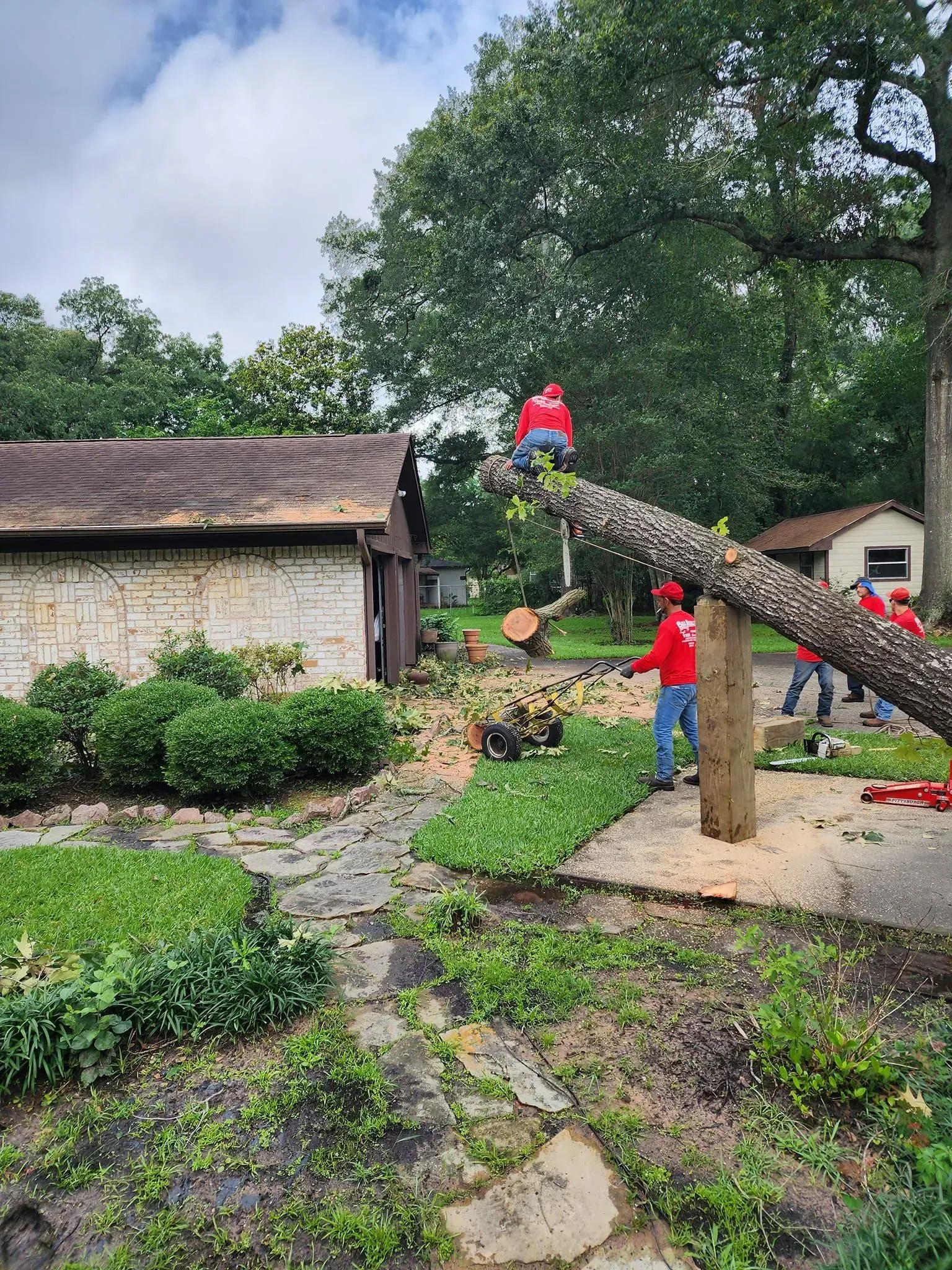
If removal is justified, the work plan should address rigging, drop zones, equipment access, utilities, nearby structures, debris handling, and stump treatment. Bill Beal's
tree removal service has more than 40 years of local experience, provides 24/7 emergency service, and has owner oversight on projects. When a tree can remain safely,
professional tree trimming may address dead or unnecessary branches without pretending that pruning can cure root decay. After removal,
stump grinding can clear the remaining obstruction, but the site should still be evaluated before replanting.
What Tree Removal May Cost in 2026
Bill Beal's does not publish a fixed removal price because the crew must inspect the tree and surroundings. Height, diameter, decay, access, equipment, rigging, cleanup, stump work, targets, and urgency change the scope. A decayed tree may require more control than a healthy tree because brittle wood reacts unpredictably. The company's free on-site estimate provides property-specific pricing before work begins.
The ranges below come from HomeGuide's February 2026 tree removal cost guide and are general national market context, not Bill Beal's pricing. Spring-area estimates may fall below or above them based on the tree, property, and requested services. Stump grinding, haul-away preferences, traffic control, crane use, and utility involvement may be separate considerations. A written estimate should clarify the removal method, cleanup, stump scope, and any exclusions.
Estimated 2026 Market Context
| Tree Size or Service | Published Market Range | Cost Factors to Confirm |
|---|---|---|
| Typical tree removal project | $400 to $1,200 | National average range across varied tree sizes and conditions |
| Small tree under 30 feet | $200 to $500 | Access, trunk diameter, species, and debris handling |
| Medium tree from 30 to 60 feet | $500 to $1,500 | Rigging needs, nearby structures, and canopy spread |
| Large tree from 60 to 80 feet | $850 to $2,000 | Equipment access, weight, decay, and controlled dismantling |
| Extra-large tree over 80 feet | $1,200 to $2,500 or more | Complex rigging, crew size, crane access, and property protection |
| Stump removal | $100 to $500 or more | Stump diameter, roots, access, and selected removal method |
| Professional tree trimming | $400 to $900 per tree | Tree size, health, branch location, and amount of work |
Frequently Asked Questions
Do mushrooms at the base always mean the tree is dying?
No, because some mushrooms decompose mulch, old roots, or buried wood without infecting the living tree. Growth attached to the root flare, trunk, exposed structural roots, or a cavity is more concerning. Canopy decline, dead branches, cavities, a new lean, and soft wood increase the need for assessment. The mushroom's location and source matter more than its presence alone.
Can I remove the mushrooms and solve the problem?
Removing fruiting bodies may improve appearance, but it does not eliminate fungal growth inside soil, roots, or wood. Mushrooms can return when moisture and temperature favor fruiting again. Photograph them before removal because shape, attachment, and location can help a professional investigate. Keep unidentified mushrooms away from children and pets.
Why did the mushrooms appear only after heavy rain?
Rain supplies moisture that can trigger fungi to produce visible fruiting bodies. The underlying fungal network may have been present long before the mushrooms appeared. Wet weather reveals activity but does not prove that the rain caused all existing decay. Repeated growth at the same root flare or trunk location deserves closer attention.
Can a tree with root rot be saved?
It depends on the organism, extent and location of decay, tree condition, and targets nearby. Some stressors can be corrected, but lost structural wood does not simply grow back. A tree with limited health symptoms and adequate strength may be monitored, while extensive root or butt decay may make removal safer. Treatment claims should follow a sound diagnosis and realistic risk evaluation.
Is trimming enough when mushrooms appear near a tree?
Trimming can remove dead or defective branches, but it cannot restore decayed anchoring roots or a weakened trunk base. Excessive pruning can add stress and may create more wounds. The assessor should determine whether the hazard is in the crown, trunk, roots, or a combination of these areas. Choose pruning only when it addresses the actual defect and leaves an acceptable level of risk.
When should hazardous tree removal happen quickly?
Act quickly when fungal growth is accompanied by a new lean, lifted soil, major cracks, extensive dieback, root movement, or recent branch failure. Urgency also rises when the tree can strike a house, road, play area, vehicle, or utility line. Restrict access and request professional help rather than testing the tree yourself. For utility contact or an immediate life-safety threat, keep clear and notify the appropriate emergency or utility service.
Schedule a Professional Tree Assessment
Mushrooms at the base of a tree may be harmless, but they can also indicate hidden root or trunk decay. A professional assessment can determine whether the tree should be monitored, trimmed, or removed for safety. Bill Beal’s Bonded Tree Service can inspect visible warning signs and evaluate the tree’s location around nearby structures. Our team provides clear recommendations based on the tree’s condition and the risks present on your property.
Bill Beal’s Bonded Tree Service serves homeowners and businesses in Spring, The Woodlands, Tomball, Cypress, and surrounding communities. We provide professional tree trimming, hazardous tree removal, stump grinding, and 24/7 emergency tree service. If mushrooms are growing around a tree that is leaning, declining, or showing structural damage, do not wait for the next storm to expose the problem. Contact Bill Beal’s Bonded Tree Service today to schedule a free on-site estimate.
Recent Posts