Can Tree Roots Damage Your Home's Foundation?
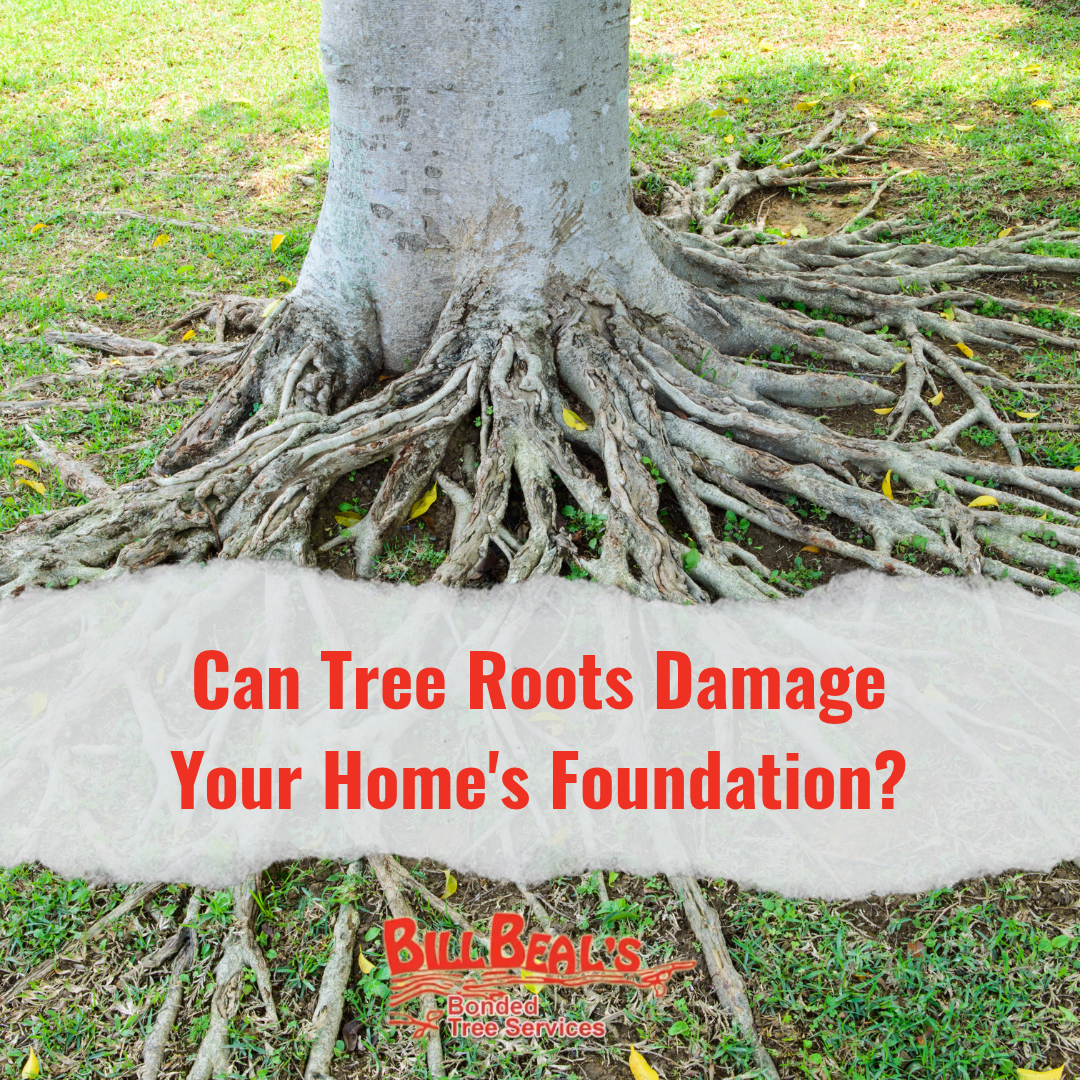
Tree roots can contribute to foundation problems, but a nearby tree does not prove it caused the damage. Roots may exploit existing openings, and their water uptake can affect moisture in shrinkable clay soils. However, drainage, plumbing leaks, construction conditions, and other factors can also influence movement. Removing a tree without understanding the cause may leave the foundation problem unresolved.
At Bill Beal's Bonded Tree Service, we help Spring-area homeowners evaluate tree concerns and plan appropriate tree work. A foundation professional should diagnose structural movement, while a qualified tree professional evaluates the tree and the implications of disturbing its roots. Those assessments answer related but different questions. Here is how to approach the concern before cutting roots or approving removal.
Do Roots Push Through an Intact Foundation?
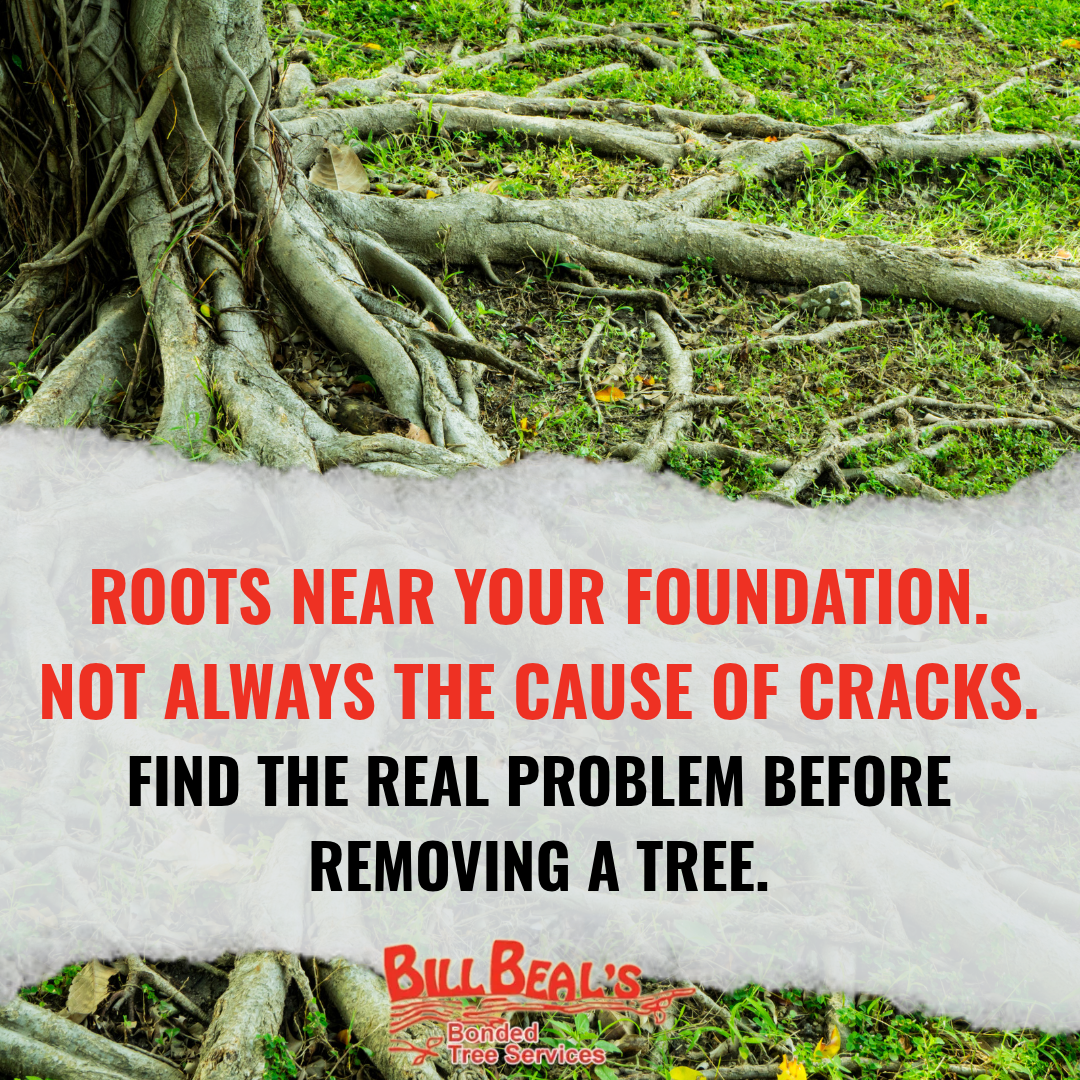
The common image of a root simply forcing its way through sound concrete can be misleading. Purdue Extension's explanation of roots and foundations describes roots as opportunistic, generally redirecting when they encounter solid barriers. Existing gaps or cracks can provide a route they may exploit. Finding roots near a structure therefore does not establish whether they created an opening or followed one that was already present.
That distinction changes what needs to be investigated. If the opening predates the roots, removing the tree does not repair the original structural or drainage defect. If roots are involved, the extent and nature of that involvement still need to be established. A useful recommendation explains the mechanism supported by the evidence rather than relying on the tree's proximity alone.
How Can Trees Influence Expansive Clay Soil?
Some clay-rich soils change volume as their moisture content changes. The British Geological Survey's shrink–swell guidance explains that drying can cause shrinkage, while renewed wetting can cause swelling. Trees draw water from soil, which can contribute to that moisture pattern where suitable conditions exist. This is different from a root physically pressing against a foundation wall or slab.
For properties around Spring and the Greater Houston area, soil and moisture behavior deserve consideration during a foundation evaluation. The amount of movement depends on site conditions, not simply the presence of clay or a mature tree. A foundation specialist can assess whether the observed movement fits a soil-moisture explanation and what further investigation is appropriate. Tree management should then be considered alongside the other findings rather than presented as the entire repair plan.
Which Signs Should Homeowners Have Evaluated?
Cracks, sticking doors, uneven floors, and changes that appear during dry weather can justify a foundation review. None of those signs identifies a particular tree as the cause. Exposed roots beside a wall are worth documenting, but they also do not show the full underground arrangement. The useful next step is to record changes and obtain the appropriate assessment.
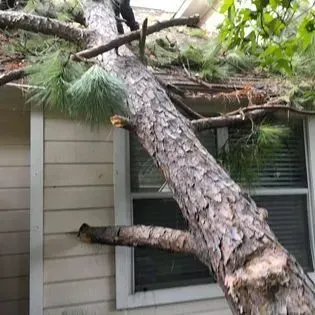
If the tree itself develops a new lean, a trunk split, hanging limbs, or movement around its base, that creates a separate safety concern. Keep people clear and request prompt professional help rather than investigating beneath unstable branches. Our article on
mushrooms around a tree's base explains another tree-related observation that may warrant evaluation. Do not combine every sign into a single diagnosis when the structure and the tree may have different problems.
| What you notice | Who should evaluate it | What the observation does not prove |
|---|---|---|
| New or changing foundation cracks | An appropriate foundation or structural professional | That a nearby tree caused them |
| Doors sticking or floors becoming uneven | A foundation professional | Whether the cause is roots, soil, drainage, or another condition |
| Roots visible beside the house | A tree professional, coordinated with the foundation evaluation | The extent of roots beneath the foundation |
| Symptoms changing through dry and wet periods | A foundation professional reviewing moisture and site history | That extra watering or removal is automatically the solution |
| A new tree lean or root-area movement | A qualified tree professional promptly | That repairing the foundation will address tree stability |
Could Drainage or a Plumbing Leak Be the Real Problem?
A foundation investigation should consider how water reaches and leaves the area around the house. Concentrated runoff, altered grading, irrigation changes, or a plumbing leak may affect moisture conditions. A tree may be part of that setting without being the primary explanation. Treating it as the cause too early can divert attention from another problem that still needs repair.
Before the assessment, gather information about drainage work, plumbing repairs, landscaping, and when the symptoms appeared. Mention whether water collects near the home or whether conditions changed after construction. Homeowners in The Woodlands, Tomball, and Humble should give each professional the same history so recommendations can be compared. We focus on the tree work and its implications while the relevant specialists address structural, drainage, or plumbing findings.
Why Is Cutting Roots Yourself Risky?
Roots are part of the tree's support and resource system, not disposable obstacles. Cutting them can affect health and stability, with consequences that may not be obvious immediately. The Texas A&M Forest Service's construction guidance identifies root severance, soil compaction, and grade changes as important sources of damage. A trench intended to protect the house can create a different hazard if the tree's needs are ignored.
Do not dig along the foundation to locate and sever roots without a coordinated plan. The significance of a cut depends on the root, its location, the tree's condition, and the work around it. A proposed root barrier also needs assessment because installing it can require the very disturbance you are trying to manage. Ask for professional guidance before excavation, grading, or foundation work changes the root area.
What Should a Coordinated Assessment Include?
Begin with two clear questions: what is happening to the foundation, and what tree work can be undertaken appropriately? The foundation specialist should explain the evidence for movement and the possible causes. The tree professional should evaluate condition, root-disturbance concerns, nearby targets, and the implications of the proposed work. If a formal arborist assessment or engineering report is needed, confirm its scope and qualifications before commissioning it.
Share written findings between the professionals instead of asking either one to make assumptions about the other's specialty. Our tree removal services can support an agreed property plan when removal is justified. A free estimate for proposed tree work is not an engineering diagnosis of the foundation. Keeping that distinction clear helps you understand what each visit establishes and what remains uncertain.
Information to gather before the visits
- Photographs and approximate dates of new cracks or changes.
- Previous foundation reports and any repair or warranty documentation.
- Records of plumbing leaks, drainage changes, and irrigation work.
- The approximate age of the tree and relevant pruning history, if known.
- Recent trenching, excavation, construction, or changes in ground level.
- Whether the concern changes with weather or has progressed steadily.
- Any independent tree hazards, including hanging limbs or a changing lean.
Document only what you can observe safely without digging, climbing, or entering unstable areas. You do not need to expose roots to make the initial appointment useful. The appropriate investigation method should follow the professionals' assessment.
Should You Monitor, Manage the Tree, or Remove It?
A nearby tree and a cracked foundation are reasons to investigate, not an automatic removal order. Monitoring may be appropriate when a professional evaluation supports retention and provides a clear review plan. A drainage or plumbing correction may be the priority when another cause is identified. Tree-related measures should address a documented concern rather than serve as a substitute for foundation diagnosis.
Removal may be appropriate when the tree presents an unacceptable hazard or a coordinated plan establishes that retention conflicts with necessary work. Ask how the recommendation accounts for the tree, the soil, and the structure before treating removal as a complete solution. Our tree trimming services can address appropriate branch concerns, but canopy pruning is not a universal foundation repair. Cutting a tree back severely to reduce water demand can create its own problems and should not be used as an improvised solution.
| Decision | When it may be appropriate | What should happen next |
|---|---|---|
| Retain and monitor | Evaluation supports keeping the tree and identifies no immediate tree hazard | Follow the recommended review and documentation plan |
| Address another site problem | Drainage, plumbing, or another factor is identified as important | Have the relevant specialist define the correction |
| Investigate roots further | Evidence leaves a specific question about root interaction unresolved | Agree on a suitable investigation that considers tree stability |
| Consider root-management measures | A professional plan supports a specific intervention | Evaluate the effect of excavation and root loss before approval |
| Remove the tree | Its condition or a coordinated property plan justifies removal | Define access, cleanup, stump work, and follow-up responsibilities |
| Request urgent tree help | New movement, major cracking, or hanging branches create a safety concern | Keep people away and arrange prompt assessment |
Will Removing the Tree Stop Foundation Movement?
Tree removal should not be promised as an automatic cure for settlement or cracking. A foundation may still need work, and other sources of uneven moisture may remain. Changes to vegetation can also alter soil-moisture conditions over time. The foundation professional should explain those implications when removal is being considered as part of a structural plan.
Ask what result the proposed tree work is intended to achieve and how it will be evaluated afterward. Removing an unsafe tree and correcting a foundation problem are separate outcomes even when the projects are related. Homeowners in Cypress and Conroe should retain both the tree-work scope and the structural recommendations. That record helps prevent later confusion about which issue each contractor agreed to address.
What Could Tree Removal or Assessment Cost?
We start with a free onsite estimate for proposed tree work, based on the actual tree and access conditions. For general planning, HomeGuide's 2026 tree removal guide reports a national average range of 400–1,200, with large or complex removals reaching about $3,000 in its overview. Those figures provide broad market context rather than a quote for your property. Our estimate reflects the work involved near your house, including the tree's condition and any equipment or access requirements.
Foundation evaluation and formal arborist assessment should be scoped separately when needed. Ask those providers what their fee includes and whether a written report or additional investigation is part of the service. For tree work, clarify whether debris removal, logs, stump grinding, and root-related work are included or excluded. Compare complete scopes rather than assume the lowest removal price includes the entire property plan.
| Service or reference | Price information | What to confirm |
|---|---|---|
| Our onsite estimate for tree work | Free | Proposed work, access, and the limits of the estimate |
| General tree removal, national reference | 400–1,200 average range | Broad budgeting context rather than our quote |
| Large or complex removal, national reference | About $3,000 in the guide's overview | Site-specific conditions may require a different scope |
| Foundation or engineering evaluation | Request the provider's defined fee | Inspection, report, measurements, and any follow-up |
| Formal arborist assessment or additional work | Confirm the scope and any separate charge | Qualifications, written findings, stump work, and exclusions |
What Should You Ask Before Approving Tree Work?
A useful proposal identifies the tree and explains what will be done, how access will be managed, and what remains afterward. Ask how nearby buildings, fences, driveways, and other features affect the work plan. If foundation repairs are also planned, confirm the sequence with both contractors before equipment arrives. Any proposed excavation or stump work deserves discussion because it can affect the root area and surrounding ground.
Our article on
property risks associated with neglected tree care provides related context for branch and property concerns. Foundation symptoms still require their own assessment rather than an assumption that routine trimming resolves them. Keep the scope focused on the confirmed tree needs and the coordinated property plan. A clear proposal should help you understand both the work being authorized and the problems it does not address.
Frequently Asked Questions
Can tree roots cause foundation cracks?
They can contribute in some situations, including interactions with existing openings and soil-moisture changes. A crack alone does not establish that roots caused it. Have a foundation professional evaluate the structure before making a tree-removal decision.
Does a tree close to the house need to be removed?
Not automatically. Species, size, condition, root-related findings, soil behavior, and the proposed property work all matter. Bill Beal's Bonded Tree Service can discuss the tree concerns while the foundation specialist evaluates structural symptoms.
Can I cut the roots I find beside the foundation?
Do not cut roots simply because they are visible or close to the wall. Root loss can affect tree health and stability, especially when excavation removes important supporting roots. Get a coordinated professional recommendation before digging or cutting.
Will trimming the branches protect the foundation?
Ordinary pruning should not be presented as a dependable foundation-repair method. Appropriate trimming can address branch clearance or other tree needs, but it does not diagnose structural movement. We recommend tree work for its defined purpose rather than promise that canopy changes will stop foundation damage.
Will removing the tree fix sticking doors or uneven floors?
There is no automatic connection between removal and correction of those symptoms. The foundation may need repair, and drainage, plumbing, or other moisture influences may remain. Ask the foundation professional what the structural plan requires before assuming removal is the solution.
How can I request help from Bill Beal's Bonded Tree Service?
Call (281) 367-4223 or contact us to discuss tree concerns and request a free onsite estimate for proposed work. We serve Spring and nearby communities, including The Woodlands, Tomball, Humble, Cypress, and Conroe. Tell us about any foundation findings and whether the tree itself has developed new damage or movement.
Make a Tree Decision Based on the Whole Property
If you are concerned about tree roots damaging your foundation, start with evidence rather than an irreversible cut. We can discuss the tree's condition and the work involved while the appropriate specialist evaluates the house. Share any existing reports so the recommendations can be considered together. Our goal is a clear tree-work plan that fits the property concern.
Bill Beal's Bonded Tree Service provides tree removal and trimming for Spring and surrounding communities. We offer free onsite estimates for proposed tree work and explain the relevant access and scope considerations. Keep clear of any tree showing active structural changes while you arrange help. Contact Bill Beal's Bonded Tree Service to discuss your tree concerns and the next appropriate step.
Helpful Services and Related Reading
Recent Posts